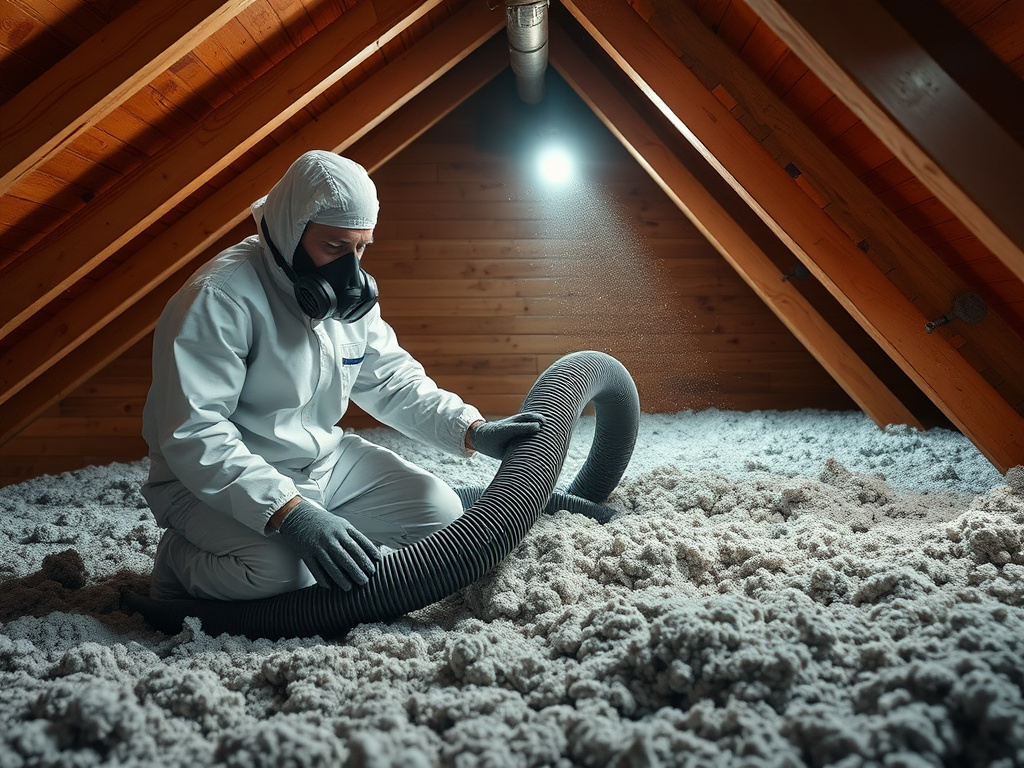
Professional cellulose insulation removal.
Old, settled, rodent-contaminated, mold-damaged, or fire-retardant-degraded attic insulation — removed with negative-pressure vacuum extraction, decontaminated, and replaced.
Removal, decon & re-insulation — one visit
Tell us what's going on with your attic and we'll build a clear, no-pressure quote for the whole job, start to finish.
- Old, settled, or underperforming insulation
- Rodent or biohazard contamination
- Mold, water damage, or fire-retardant age
Your attic insulation may be hiding more than dust.
Cellulose insulation doesn't fail all at once — it settles, compacts, and quietly loses R-value over years. Sometimes it's worse: rodent droppings and nesting, mold from a roof leak, or fire-retardant that's leached out with age and moisture, all invisible from the attic hatch.
We remove it with HEPA-filtered vacuum-truck extraction, decontaminate the space, and help you choose what goes back in — just the trade work done right.
Whether it's simply old and settled, or a rodent, mold, or fire-retardant situation, we identify what you're actually dealing with before we ever quote the job.
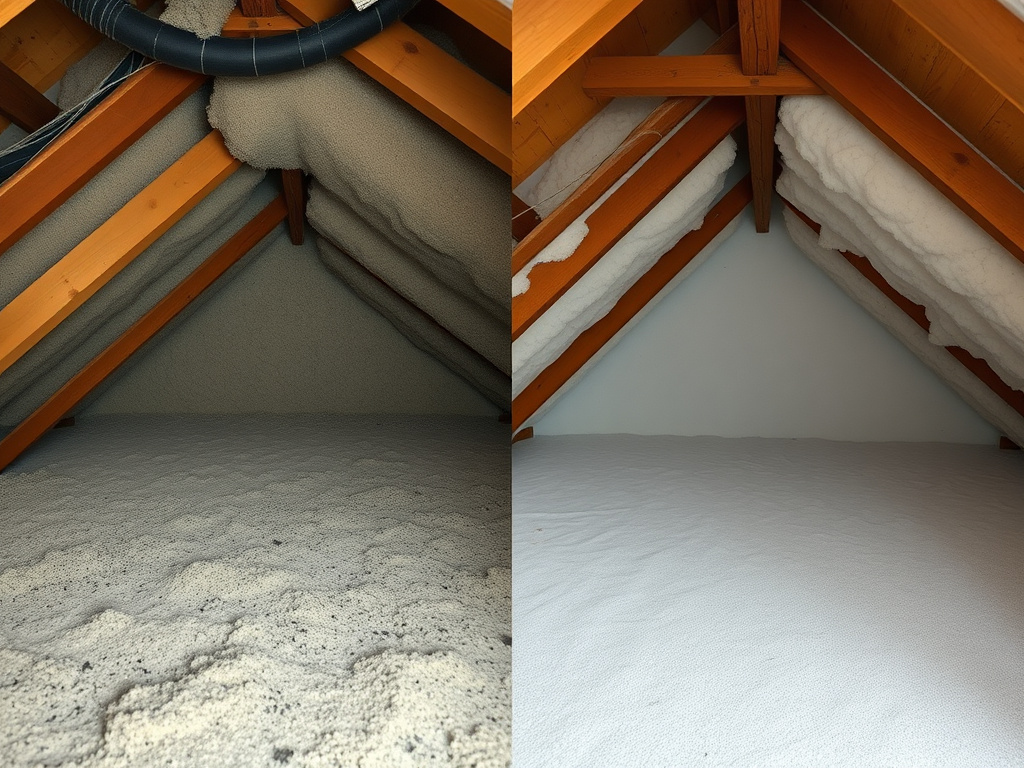
Signs you need insulation removal
Any one of these is worth a professional look. Two or more together is a strong case for full removal.
Rodent droppings or nesting
Urine and droppings permanently contaminate cellulose — it can't be cleaned in place.
Mold or water staining
Wet cellulose loses insulating value fast and becomes a mold-growth medium.
Thin, patchy coverage
Settling can cost up to 20% of original loft with no visible change from the hatch.
Older than 20 years
Borate fire retardant leaches out gradually with age and moisture — no visual warning.
Dust in living space
Fibrous debris around recessed lighting or closets signals a failing attic floor.
Rising energy bills
Compacted insulation quietly underperforms its rated R-value for years.
From free quote to a clean, re-insulated attic
Inspect
We assess what's actually going on — old, rodent, mold, or fire-retardant age — before quoting anything.
Vacuum-remove
Negative-pressure vacuum-truck extraction pulls contaminated insulation out and into sealed containment.
Decontaminate
HEPA vacuuming, enzymatic odor treatment, and antimicrobial fogging where contamination requires it.
Re-insulate
Fresh cellulose, fiberglass, or spray foam goes back in — usually the same visit.
Removal for every attic situation
Old and settled, rodent-contaminated, mold-damaged, or fire-retardant-degraded — click any service to see how it works.
 Highest Differentiation
Droppings-contaminated insulation can't be cleaned — it has to come out.
Mouse or rat droppings, urine staining, and nesting material can never be safely reused — aerosolized particles from dried droppings can carry hantavirus and other pathogens. We treat it as a biohazard-handling job: PPE, containment, HEPA-filtered vacuum extraction.
- Never DIY — droppings aerosolize when disturbed
- Full PPE and negative-pressure containment
- HEPA-filtered vacuum extraction
- Attic decontamination included
Insulation removal FAQs
Yes, once it's compacted or settled below effective R-value, shows any contamination, or is older than roughly 20 years with a moisture history along the way. A quick attic inspection tells you which situation you're actually in.
Yes — urine and droppings permanently contaminate cellulose fibers. There's no effective way to clean contaminated insulation in place, which is why it has to come out rather than just get topped up.
Most single-family attics take 2-5 hours with a vacuum truck, depending on square footage, accessibility, and contamination level.
Borate fire retardant leaches out gradually with moisture exposure and settling, typically becoming unreliable before the insulation looks worn out. There's no visual test — age (15-25+ years) is the signal to watch.
Plain, uncontaminated cellulose can typically go to standard disposal. Anything with rodent waste or mold requires bagged, contained handling — our crew determines and manages this on-site.
Yes, if the old material is contaminated, compacted, or degraded. New insulation on top of a compromised layer just traps the problem underneath instead of fixing it.
Get your free insulation removal quote
Old, rodent-contaminated, moldy, or fire-retardant-degraded attic insulation — tell us about it and we'll put together a clear, no-pressure quote for removal, decontamination, and re-insulation.